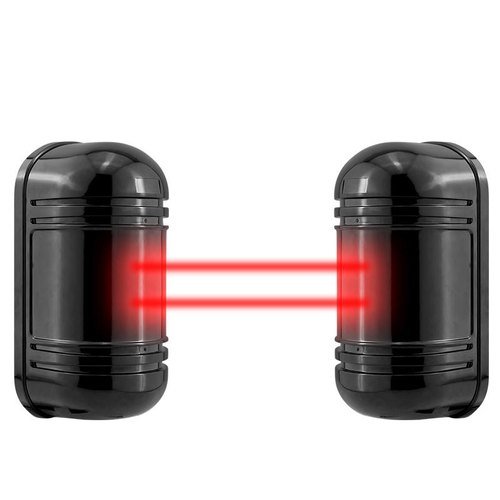
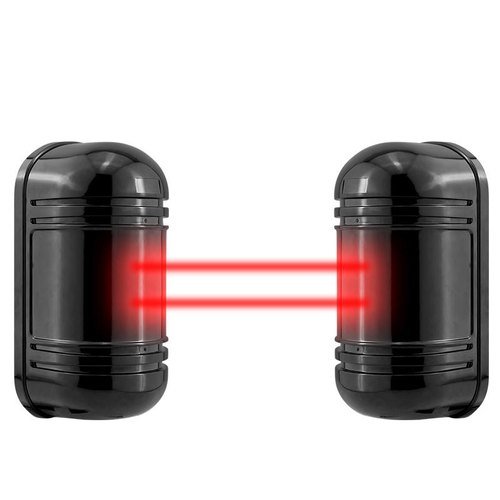
Passive Infrared (PIR): Detects the heat emitted by a person or object as it moves across the sensor's field of view.
Microwave: Emits microwave signals and detects changes in the reflected pattern that indicate movement.
Ultrasonic: Sends out ultrasonic waves and detects disruptions in the sound waves.
Combined (Dual Technology): Uses a combination of technologies, such as PIR and microwave, to reduce false alarms and ensure more accurate detection.
Performance and Control:
Sensitivity and Range: Adjustable settings allow users to fine-tune the sensor's detection range and sensitivity, which helps minimize false alarms from sources like pets or air conditioning.
Pet Immunity: Features that ignore the motion of smaller animals, preventing them from triggering the alarm.
Integration and Deterrence:
Alarm Integration: Connects to a central control panel to trigger the alarm when motion is detected.
Deterrent Functions: Can trigger other deterrents like sirens, flashing lights, or voice warnings to scare off intruders.
Mobile Alerts: Newer systems can send immediate alerts to a user's mobile phone upon detection.
Environment and Placement:
Indoor vs. Outdoor: Outdoor sensors are built to withstand various weather conditions and a wider range of environmental factors, such as moving vegetation and vehicle headlights.
Specialized Lenses: Some sensors have lenses that provide a wider viewing area or special patterns to maximize coverage.

 Elphamatt